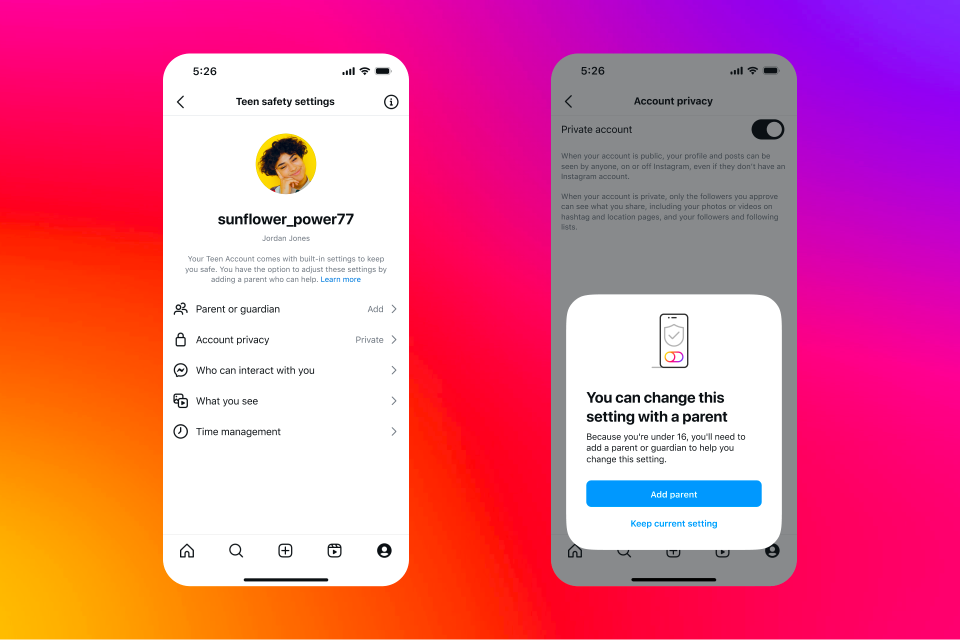
Instagram's Teen Accounts are designed to give younger users a more protected version of the platform by automatically applying stricter settings around privacy, messaging, content and time spent in the app.
Meta announced the expansion of Teen Accounts to India in February 2025. The company said the protections were designed to address common concerns about who teens interact with, what content they see and how they manage their time online.
What is an Instagram Teen Account?
A Teen Account is an Instagram account with built-in protections enabled by default. Instead of expecting a teenager or parent to manually configure every privacy and safety option, Instagram applies a more restrictive starting point.
Meta said these settings apply to teens under 16, with some protections also applying to teens under 18 when they sign up. For users under 16, changing certain settings to a less restrictive state requires parental approval.
Private accounts by default
One of the most important changes is privacy. Teen Accounts are set to private by default. That means a teenager has to approve new followers, and people who are not followers cannot simply view and interact with the teen's content as they could with a public account.
Private-by-default settings do not remove the need for conversations about online safety. Parents and teens still need to think about who is accepted as a follower, what is posted publicly through other services and how personal information is shared.
Stricter messaging settings
Teen Accounts also apply stricter rules to direct messages. Meta says teens are placed into the strictest messaging settings, allowing messages from people they follow or are already connected with.
The aim is to reduce unwanted contact from people a teenager does not know. This is especially relevant because direct messaging can move quickly from a public interaction to a private conversation.
Sensitive content controls
Instagram automatically places Teen Accounts in the most restrictive version of its Sensitive Content Control. Meta says this reduces teens' exposure to sensitive material in areas such as Explore and Reels.
The company has also described additional protections for content involving topics such as sexually suggestive material, physical fights and other potentially inappropriate material. In some situations, sensitive content can be hidden even if it was posted by an account the teen follows.
Tags, mentions and Hidden Words
Teen Accounts also limit certain interactions. Meta says teens can only be tagged or mentioned by people they follow. Instagram's stricter version of Hidden Words is enabled by default to help filter offensive language in comments and message requests.
These controls are designed to reduce unwanted interactions, but they should be understood as one layer of protection rather than a replacement for good privacy habits.
Daily time reminders and Sleep Mode
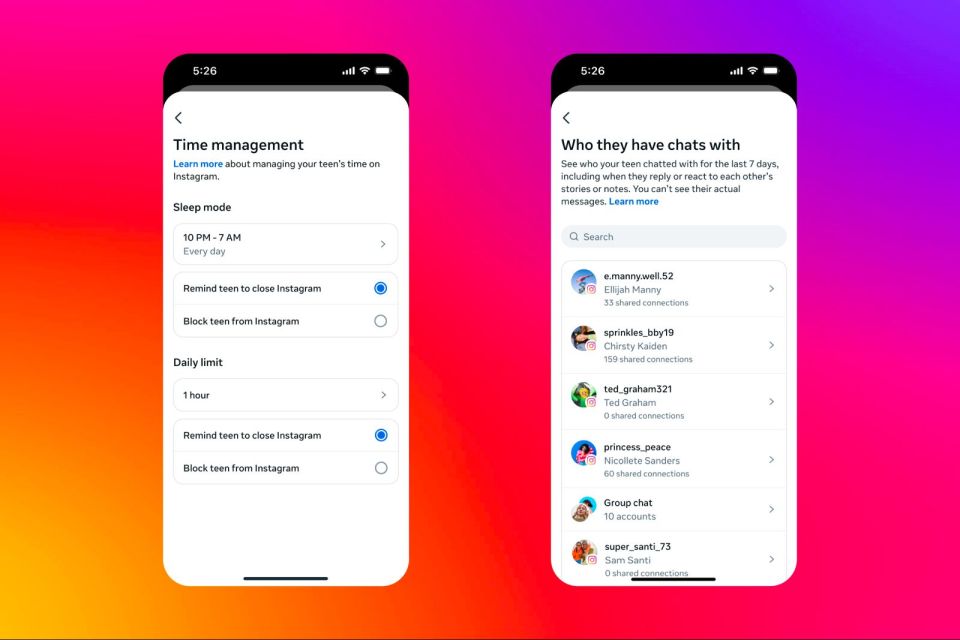
Time management is another major part of Teen Accounts. Meta says teens receive reminders after 60 minutes of daily usage. Sleep Mode is also enabled from 10 PM to 7 AM, muting notifications and sending automatic replies to DMs overnight.
Parents can also set daily time limits through supervision tools. Once the limit is reached, the teen can no longer access Instagram until the restriction period allows access again.
What can parents see?
Instagram's parent supervision tools are designed to provide oversight without giving parents unrestricted access to private message content. Meta said parents can see a list of people their teen has messaged during the previous seven days, but they do not see the contents of those messages.
Parents can also set daily time limits and block Instagram during specific hours. For teens under 16, parents can approve or deny requests to make certain safety and privacy settings less restrictive.
Age verification and age protection
One challenge for any teen-safety system is that people can enter an incorrect age when creating an account. Meta said it was strengthening age-related measures so that additional verification could be required in certain situations, including cases where someone tries to create an account using an adult birthday.
Meta has also said it is working on technology to identify accounts that may belong to teens even when the account lists an adult birthday. The precise enforcement methods can evolve as Instagram updates its systems.
What parents should check with their teenager
- Review who can follow the account and who the teen follows.
- Discuss what information should never be shared in posts or DMs.
- Check time-management settings and agree on reasonable limits.
- Explain how to report, block and restrict accounts.
- Talk about suspicious links, requests for personal information and unknown contacts.
- Review privacy settings together instead of treating them as a one-time setup.
Teen Accounts are not the same as complete protection
Built-in settings can reduce exposure and unwanted interactions, but no platform setting can eliminate every online risk. A teenager can still encounter misleading information, pressure from peers, scams or harmful behavior through accounts they know.
That is why the technical controls work best alongside basic digital-safety habits: use strong passwords, avoid sharing sensitive personal information, question unexpected requests and use Instagram's reporting and blocking tools when something feels unsafe.
Why the India rollout matters
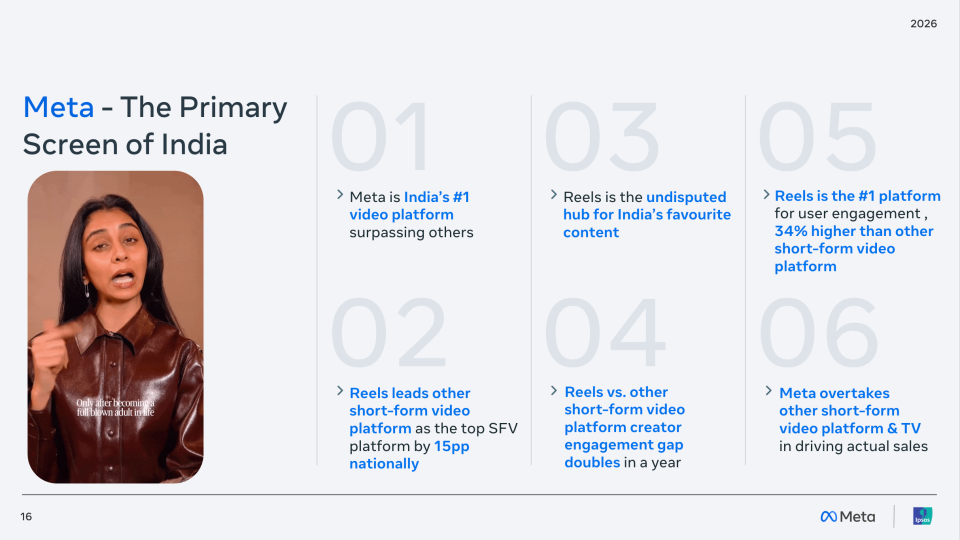
India is one of Instagram's largest and most active markets, so the rollout of Teen Accounts affects a substantial user population. Meta described the India expansion as part of its broader effort to create an age-appropriate Instagram experience and give parents more visibility into how teens use the service.
Bottom line
Instagram Teen Accounts combine several protections into a default package: private accounts, stricter messaging, more restrictive sensitive-content controls, limited tagging and mentions, Hidden Words, usage reminders and Sleep Mode. Parents can add supervision tools such as time limits, scheduled blocks and approval for certain settings changes.
The result is not a separate social network for teenagers. It is a more restricted version of Instagram designed to reduce exposure to unwanted contact and age-inappropriate content while giving families more tools to manage the experience.
Source: Meta Newsroom, February 11, 2025. Instagram's safety features and eligibility rules can change as Meta updates Teen Accounts.